Equine PACS Integration,
Built Into StableTrack
Last updated: 20 October 2026
StableTrack connects directly with DICOM-compatible PACS systems, so radiographs, ultrasound studies, and endoscopy images appear automatically in the horse's medical record alongside SOAP notes, billing, and clinical history.
Whether you're in the clinic or at the barn, everything stays connected in one place.
Quick answer
What is equine PACS integration?
Equine PACS integration is the connection between an equine practice's diagnostic imaging system (the PACS, or Picture Archiving and Communication System) and its practice management software, so radiographs, ultrasounds, and endoscopy images are automatically linked to the correct horse's medical record. StableTrack integrates with DICOM-compliant PACS systems, including Asteris Keystone, so imaging lives alongside SOAP notes, lameness exams, billing, and referral documentation.
What is Equine PACS Integration?
A Picture Archiving and Communication System (PACS) stores your diagnostic images. Practice management software stores your appointments, medical records, and invoices.
Without integration, these systems operate separately. Images need to be uploaded, studies matched to patients manually, and billing often happens later.
StableTrack connects the two, so imaging becomes part of the horse's medical record automatically.
That means
- Images are linked to the correct horse
- Studies appear inside the patient record
- Clinical notes stay connected to imaging
- Charges flow directly to the invoice
- Referral cases can be shared without exporting files
Instead of managing two systems, your team works from one workflow.
Built Around How Equine Practices Actually Work
Most equine imaging happens in the field, not in a hospital imaging suite.
You're moving between barns, trucks, and clinics while documenting cases on multiple devices. Every extra login or manual upload slows you down.
StableTrack removes those extra steps by connecting imaging directly to your everyday workflow.
Once a study is captured, it's available alongside:
Everything lives in one patient timeline.
Imaging Becomes Part of the Record
Instead of switching between different applications throughout the day, imaging simply becomes another part of the patient's record.
Capture the study using your existing DICOM-compatible PACS.
StableTrack links the study to the correct horse automatically.
View images from the patient's chart on desktop, tablet, or mobile.
Add notes, create invoices, and share referral cases without leaving the record.
No manual uploads. No duplicate patient records. No chasing missing studies.
Everything Stays Connected
View imaging anywhere
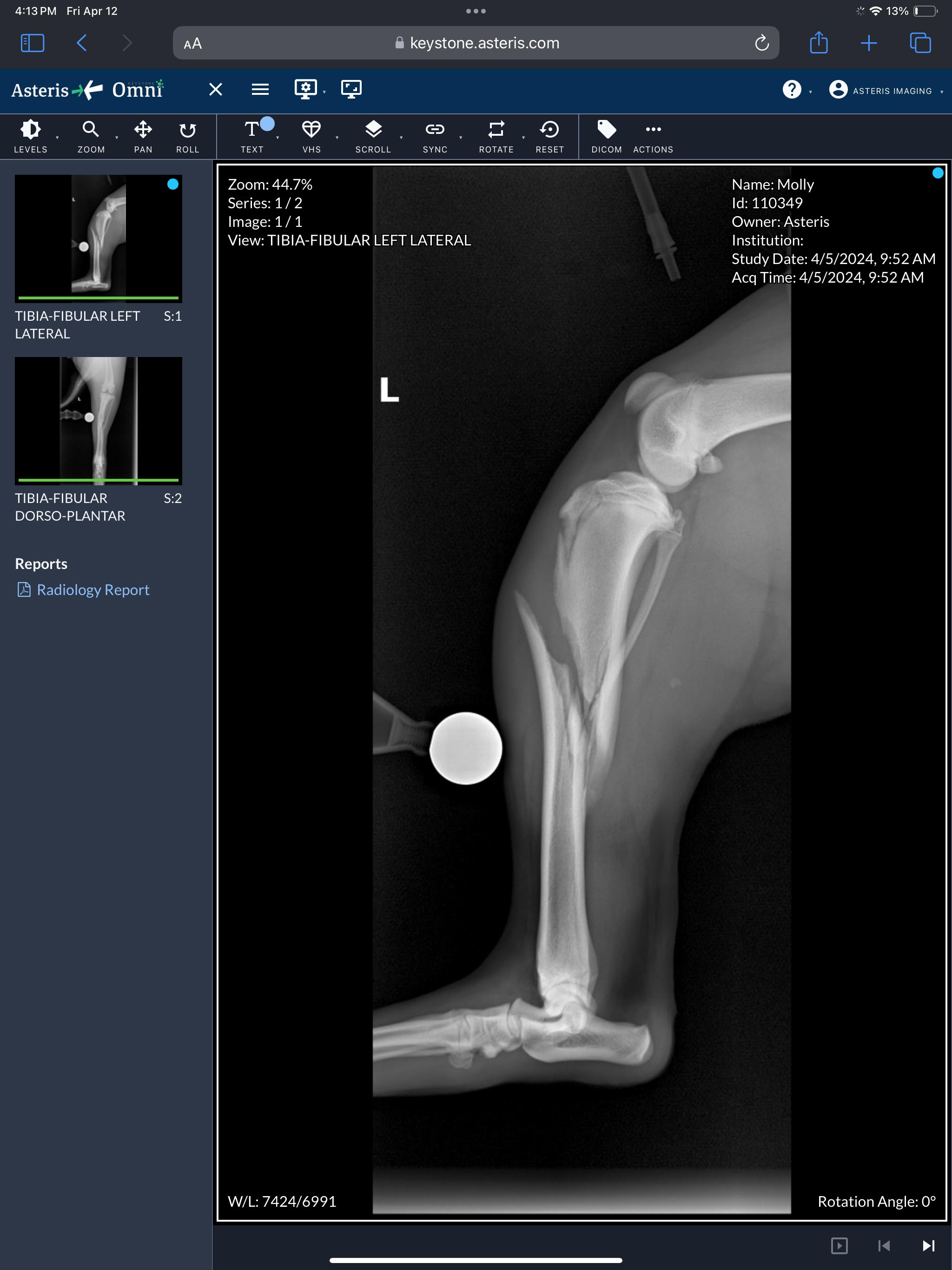
Open radiographs, ultrasound studies, and endoscopy images directly from the horse's chart whether you're at the clinic or on a farm call.
Complete patient history
Imaging sits alongside clinical notes, medications, procedures, and previous visits, giving you the full picture without switching systems.
Faster referrals
Share imaging together with SOAP notes and clinical history so referral hospitals receive complete case information instead of disconnected files.
Automatic billing
Imaging procedures recorded in the patient record automatically populate invoices, helping prevent missed charges.
Supports Every Major Imaging Modality
StableTrack works with DICOM-compatible imaging systems, including:
Digital Radiography
Ultrasound
Endoscopy
CT
MRI
As your equipment changes over time, your workflow doesn't have to.
Why DICOM Matters
DICOM is the industry standard used by modern veterinary imaging equipment.
It allows systems from different manufacturers to communicate using the same format, making it possible to link studies to the correct patient regardless of which hardware captured the images.
StableTrack uses DICOM to automatically associate every study with the right horse, exam, and clinical record.
How the data moves between the practice system and the PACS
Two parts of the DICOM standard do the work. The modality worklist carries the order from the practice system to the imaging equipment, so the horse, the study type and the requesting vet are already on the modality when the patient is selected. Modality Performed Procedure Step (MPPS) sends the completion back the other way. Without them, a study is matched to a record by hand, and in equine practice that hand belongs to the vet who took the radiograph, often hours later, from the truck.
This is what a connected imaging case looks like in StableTrack with Keystone:
- 1You order the study from the horse's chart. It appears on the modality worklist with the patient details, so nobody re-types the horse's name and signalment into the imaging equipment.
- 2The charge is created when you order, attached to the right invoice, instead of being reconstructed at the end of the day.
- 3The images and the finalized report come back to the horse's chart on their own. No import, no PDF chased through email.
- 4You open the full study in the Keystone Omni viewer from the horse's profile, in a browser on a Mac, PC, iPad or tablet, in the clinic or in the field.
- 5A discharge summary generated within the admission window attaches the relevant studies automatically, thumbnails and report PDFs included.
Questions to ask about any integration
- Does ordering push to the modality worklist? If patient data does not travel to the imaging equipment on its own, someone is still re-typing it.
- Do the images and the report come back to the chart without an import?
- Is the charge created when the study is ordered, or added later by hand?
- Can you open the study from the chart on a tablet in the field?
- Is it native, or a bridge between two vendors with a second login?
"Integration" sometimes means "you can upload a file". The worklist question is the quickest way to tell.
Why Practices Choose Integrated Imaging
Without integration
- Two separate systems
- Manual uploads
- Duplicate patient information
- Missed billing opportunities
- Slower referrals
With StableTrack
- One patient record
- Imaging linked automatically
- Billing captured immediately
- Clinical context always attached
- Faster collaboration with referral hospitals
How Equine Practice Software Handles PACS Integration
Most equine practice management software does not include native imaging integration. Where imaging is available, it is usually delivered through a third-party PACS partner rather than a system built by the same team. The difference matters because native integration keeps imaging studies attached directly to the horse's record without a bridge, a separate login, or a delay. You can learn more about the native Asteris Keystone integration.
For practices using VetlinkPRO, Asteris Keystone Omni provides an established PACS integration: patient details flow from VetlinkPRO to the imaging worklist, then images and reports attach back to the patient record without re-keying. Integration depth can vary by VetlinkPRO version and practice setup. Review the official VetlinkPRO integration details.
| Equine PMS | PACS Integration | Delivery |
|---|---|---|
| StableTrack | Native | Asteris Keystone, built by the same team |
| VetlinkPRO | Integrated | Asteris Keystone Omni connection |
| Cassadol | None published | Not applicable |
| ThoroVet | None published | Not applicable |
| HVMS | None published | Not applicable |
| ezyVet | Third-party partners | Requires separate PACS provider and integration setup |
| DaySmart Vet | None published | Not applicable |
| Covetrus Pulse | None published | Not applicable |
Native integration means imaging orders, studies, and reports live inside the same patient record the veterinarian is already documenting in. No importing, no reconciling, no separate credentials. For equine practices doing radiographs, ultrasound, or CT on a regular basis, this reduces the administrative overhead of documenting an imaging case from minutes to seconds.
Frequently Asked Questions
- Equine PACS integration connects a practice management system to a picture archiving and communication system, so that imaging studies (radiographs, ultrasound, CT, MRI) attach directly to the horse's medical record. Native integration means the PACS and the practice management system are built by the same team, so there is no third-party bridge or duplicate login. StableTrack integrates natively with Asteris Keystone because both are built by the same team; the imaging study, order, and report all live on the same horse record inside the practice management system.
- StableTrack integrates with Asteris Keystone PACS, which supports the standard DICOM protocol used by veterinary imaging equipment (X-ray, ultrasound, CT, dental, and MRI). If your practice uses DICOM-compliant imaging equipment, it can send studies into Keystone and those studies will appear in the horse's record inside StableTrack. There is no need to replace or change your imaging equipment to use the integration.
- Native PACS integration means the practice management system and the PACS are built by the same team, so studies attach automatically to the patient record with a single login and no bridge software. Third-party PACS integration means the practice management system connects to a PACS built by another vendor, which usually requires a separate account, separate configuration, and a bridge or middleware to move studies between systems. StableTrack and Asteris Keystone are natively integrated. Most other equine practice management software either does not integrate with PACS at all, or integrates through a third-party partner.
- StableTrack integrates with DICOM-compliant PACS systems, including Asteris Keystone, by linking imaging studies directly to the horse's clinical record. When a radiograph or ultrasound is captured, it appears in the patient timeline automatically, viewable on phone, tablet, or desktop without a separate PACS workstation. Imaging studies also flow into the invoice as billable line items, and can be shared with referral hospitals along with clinical notes from a single interface. Your existing PACS continues to handle image acquisition and long-term storage.
- StableTrack's equine PACS integration supports DICOM-compliant PACS systems, including Asteris Keystone. If your imaging equipment outputs standard DICOM files (digital radiography, ultrasound, endoscopy), StableTrack can connect to it. Contact us for specific compatibility questions or to confirm support for your current vendor.
- Yes. StableTrack displays diagnostic images on any device. You can review radiographs at the barn on your tablet during the exam, without needing a separate PACS workstation, and compare current and prior studies side by side.
- No. StableTrack's equine PACS integration works with your existing PACS to bring images into the patient record. Your PACS continues to handle image acquisition and storage. StableTrack adds clinical context, multi-device viewing, billing automation, and referral sharing on top.
- Yes. Imaging studies can be shared directly from the patient record along with clinical notes and assessment. No need to burn CDs or email zip files. The receiving hospital sees the complete clinical picture in one secure share.
- Yes. With equine PACS integration in StableTrack, imaging studies documented in the patient record automatically populate the invoice with the correct billing codes. Radiograph series, ultrasound studies, and additional views are captured as billable items without manual entry, eliminating the revenue leakage that often happens when imaging lives in a separate system.
- DICOM (Digital Imaging and Communications in Medicine) is the universal standard for medical imaging file format and network communication. Every modern radiography unit, ultrasound, and endoscope produces DICOM files. The standard ensures that an image captured on one vendor's hardware can be read on another vendor's viewer, and that patient identifiers, study type, and acquisition parameters travel with the image. This is what makes equine PACS integration across multiple imaging vendors possible.
- StableTrack supports digital radiography (limb, foot, dental, head studies), ultrasound (tendon, ligament, abdominal, reproductive), endoscopy (upper airway, gastric, reproductive), and CT and MRI from referral imaging centers. Any DICOM-compliant modality can be linked to the patient record.
- The modality worklist is the part of the DICOM standard that sends a scheduled study from the practice system to the imaging equipment, with the patient details attached. It is the foundation of a real integration: if a vendor cannot push orders to the worklist, patient data is still being typed into the modality by hand.
- When you refer a case, StableTrack sends the imaging study and the clinical context (SOAP note, lameness grade, blocking results, contact information) to the referral hospital in one share. When the hospital adds their own imaging or notes, those updates flow back into the same patient record, so you see the full picture without chasing emails.
Ready to Keep Imaging and Records Together?
See how StableTrack connects your PACS with scheduling, medical records, and billing in one workflow.
Flat $199/mo, unlimited users