
Equine Veterinary Software
for Horse Vets
Equine veterinary software is practice management software built for horse veterinarians: clinical records, scheduling, billing and inventory organised around the horse rather than the exam room. It is built for ambulatory work, so drive time sits in the schedule, records and invoices keep working without signal, equine data such as height in hands and AAEP lameness grades are searchable fields, and one visit can be billed to several owners, trainers and barns.
Free trial set up with our team. Plans from $199 a month, unlimited users.
One Difference Causes All the Others
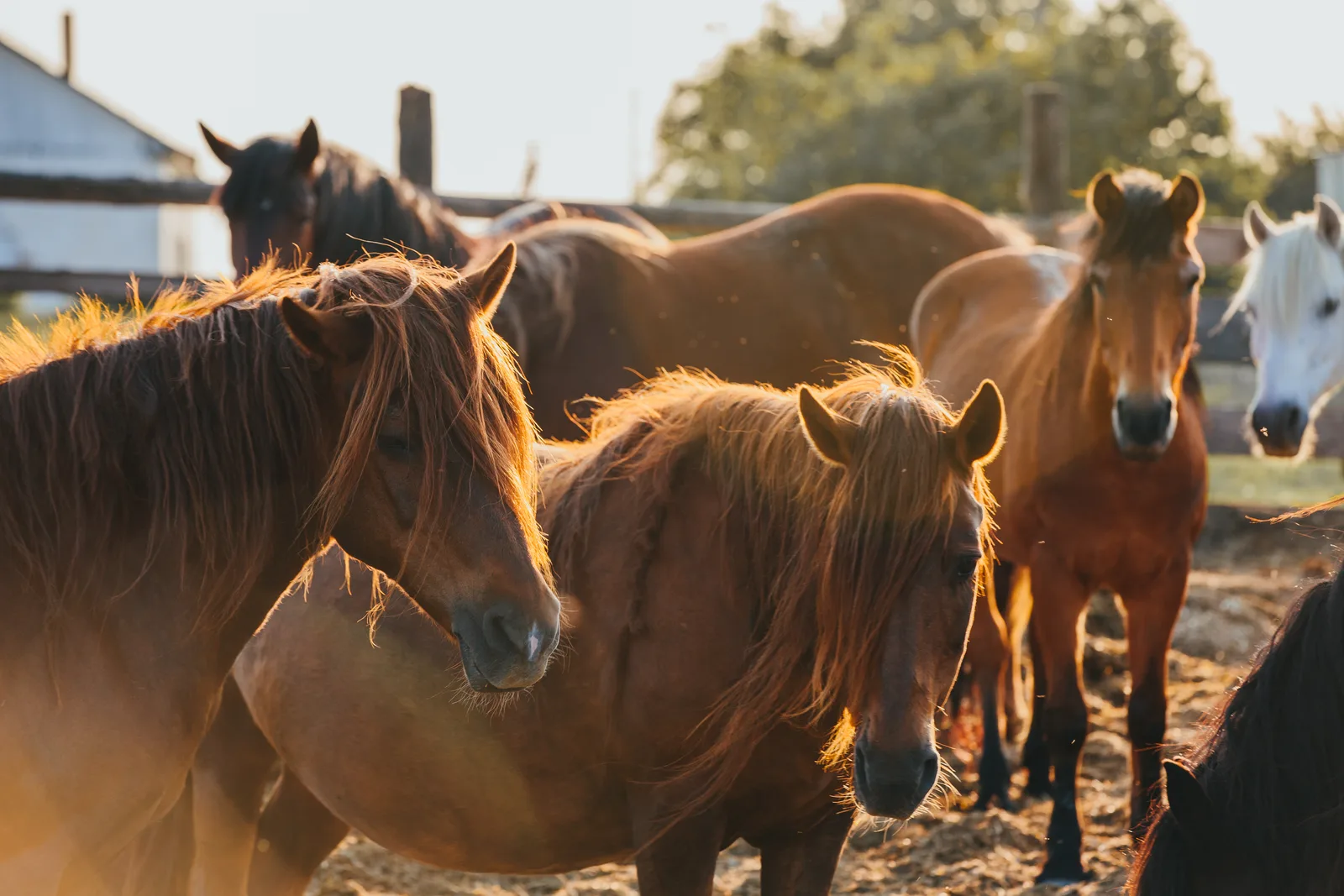
Small-animal software assumes the patient comes to you. The exam room is the unit of work, the front desk is the control point, and the day is a sequence of arrivals. Equine software has to assume the opposite: you go to the patient, the truck is the clinic, and the day is a route.
Every mechanism on this page is downstream of that sentence. It is four in the afternoon at the third barn of the day. The vet is finishing notes on a flexion test with a laptop balanced on a tack trunk, the owner is three states away, the trainer wants to know about the radiographs tonight, and there is one bar of signal in the aisle. None of that is unusual in equine practice, and none of it was considered when clinic software was designed.
What the Software Actually Does
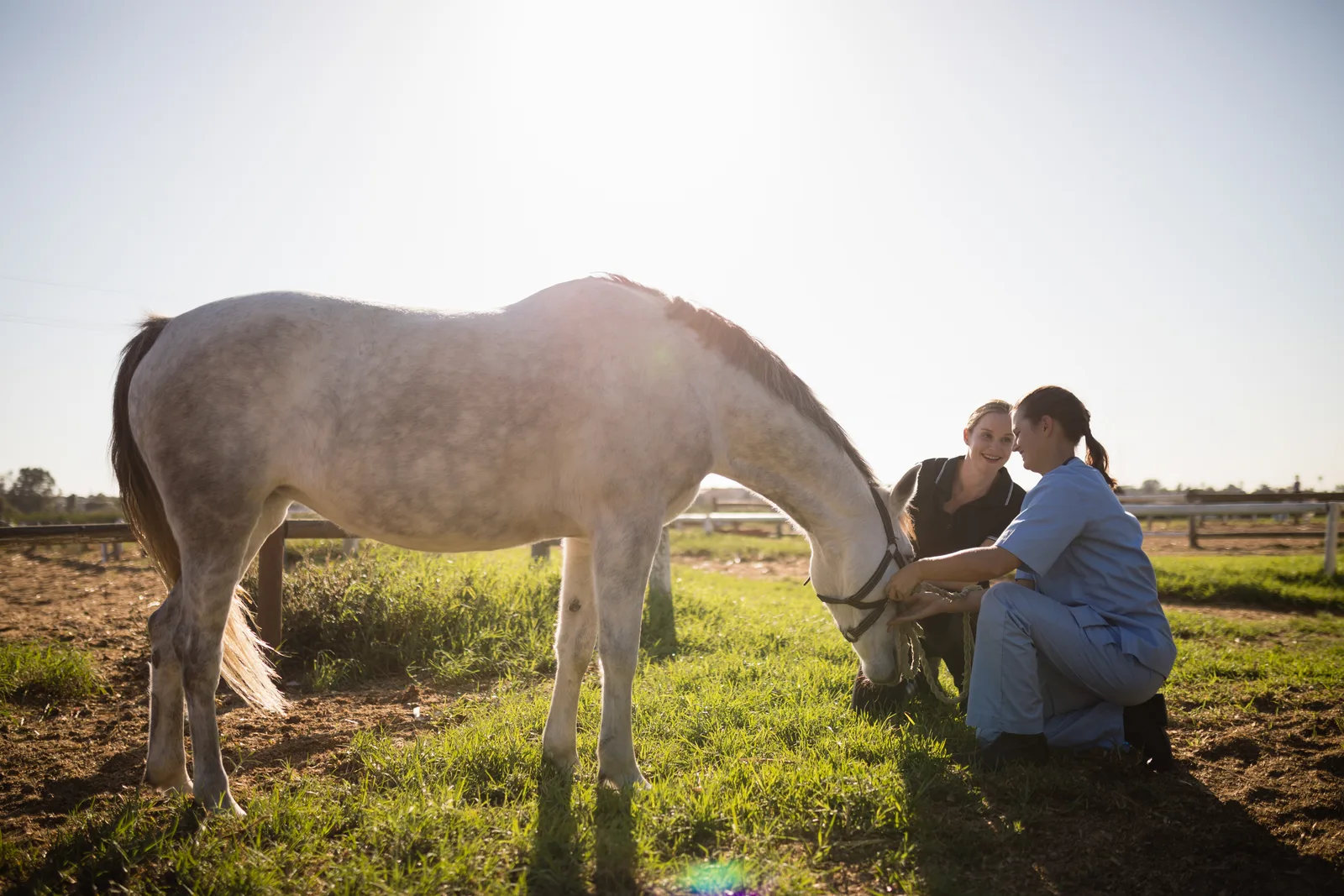
Five parts of the job that clinic software was never asked to do, and what equine software does instead.
Field documentation
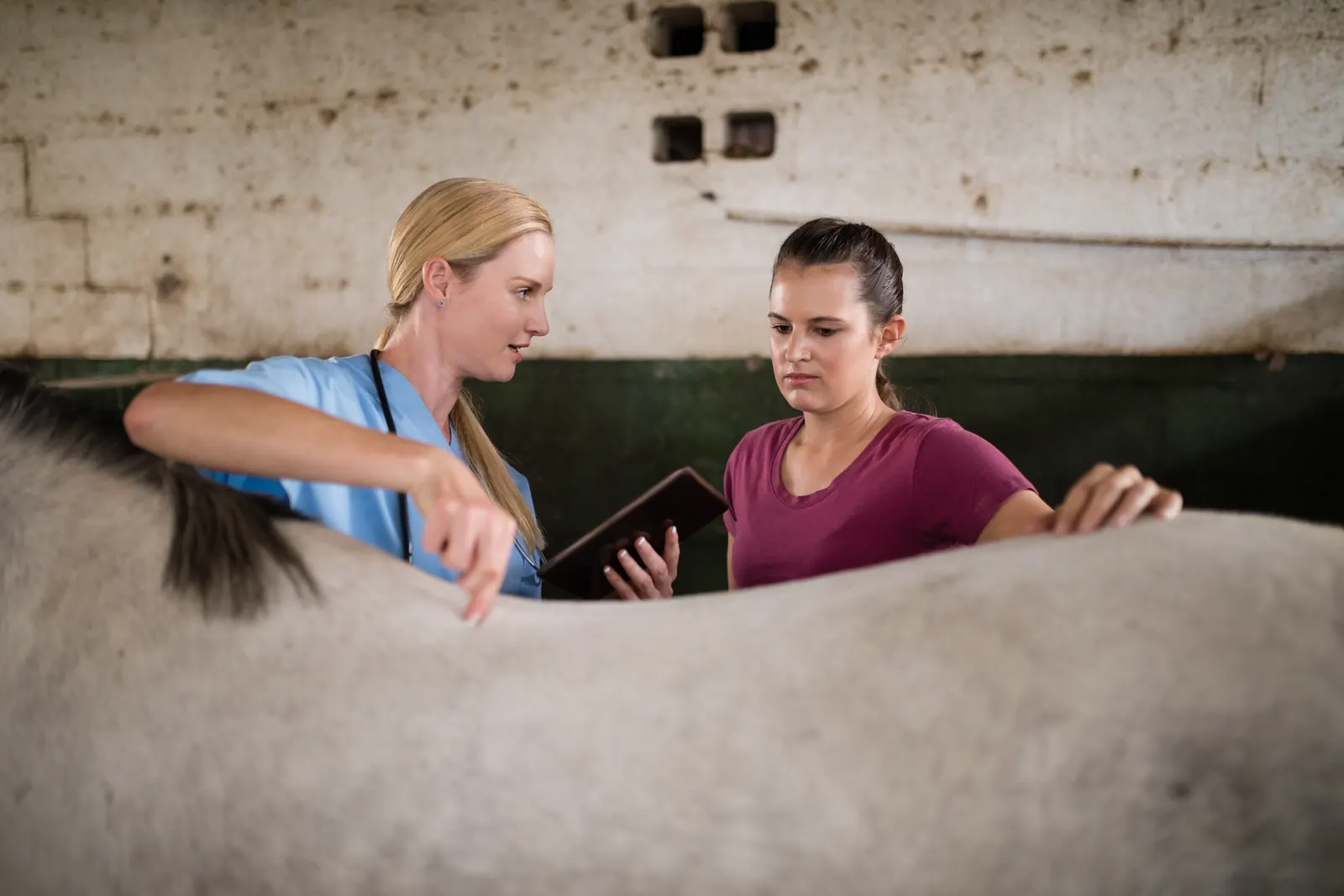
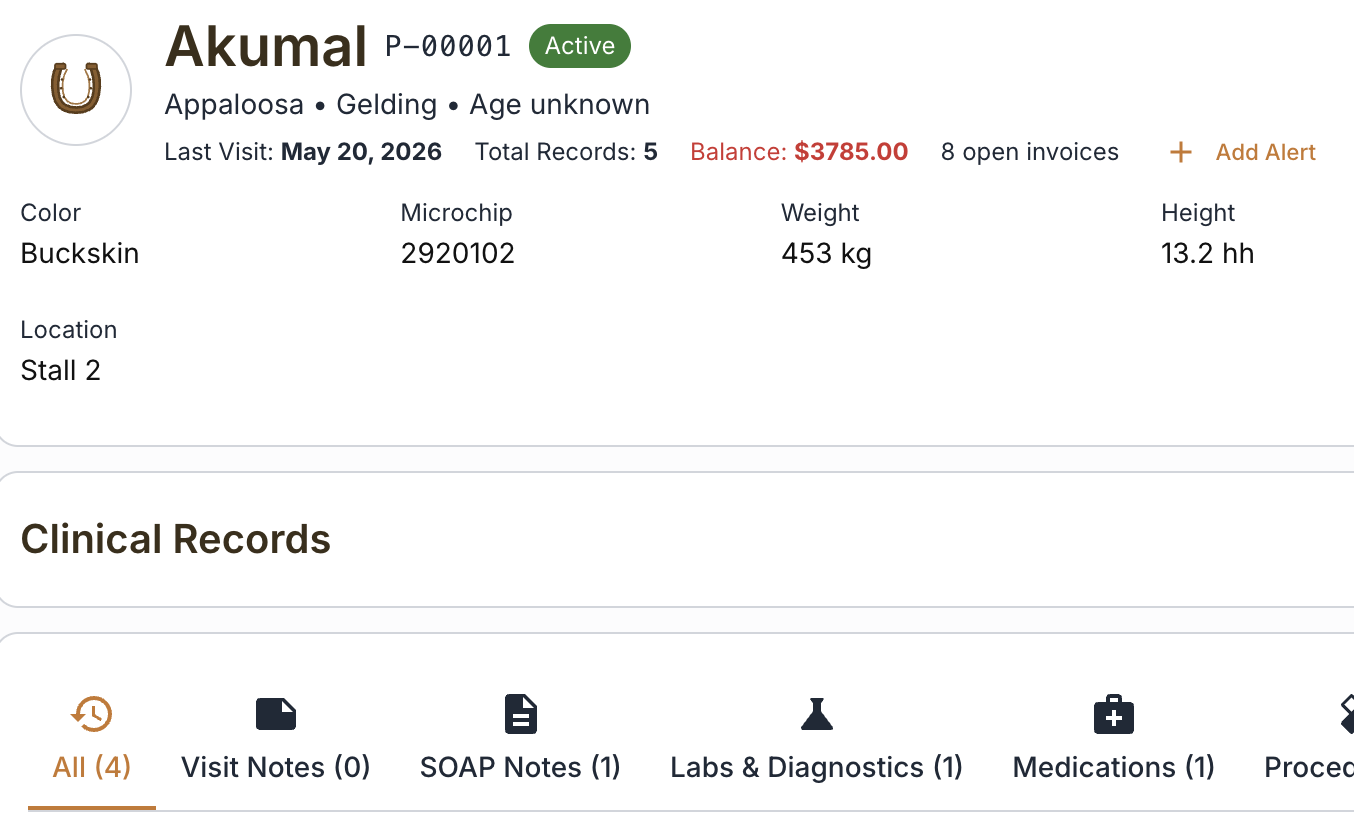
The exam is recorded where it happens, on a phone or tablet in the aisle, in the fields a horse vet actually uses: breed, colour, height in hands, mare, gelding or stallion rather than M/F, microchip, stall location, trainer and barn. Clinical findings go into structured fields too, so an AAEP lameness grade, a Henneke body condition score or a hoof measurement can be searched and trended across visits instead of sitting in free text where nobody finds it at the next PPE. Charges entered during the exam carry straight to the invoice, which is where procedures and medications stop going missing between the barn and the front desk.
Structured notes, templates for lameness exams, pre-purchase exams and dentals, and voice drafting are covered on our equine SOAP notes software page.
Barn-level scheduling
Clinic scheduling thinks in slots: fifteen minutes, thirty minutes, exam room two. It works because the drive time between patients is zero. An equine schedule has to hold drive time as part of the day. A morning of four farms is really three appointments and forty minutes of highway, and when the colic call comes in at two the rest of the afternoon reshuffles around it.
Barn-level scheduling blocks time for the facility visit, assigns several horses to that one call, and tracks which services (exam, vaccine, dental, ultrasound) apply to each animal. A multi-provider calendar shows which vet is already closest. Practices running clinic software on a field schedule almost always end up with a second, unofficial system: the route lives in someone's head, the reshuffles happen over text, and the software becomes a record of what was supposed to happen. That gap is where missed charges and double-booked afternoons come from.
Multi-owner billing
Clinic billing assumes a checkout. Field billing has none of those anchors. The vet leaves the barn, drives to the next one, and the invoice gets built later, often that evening, while the drug used and the second horse added at the last minute fade from memory.
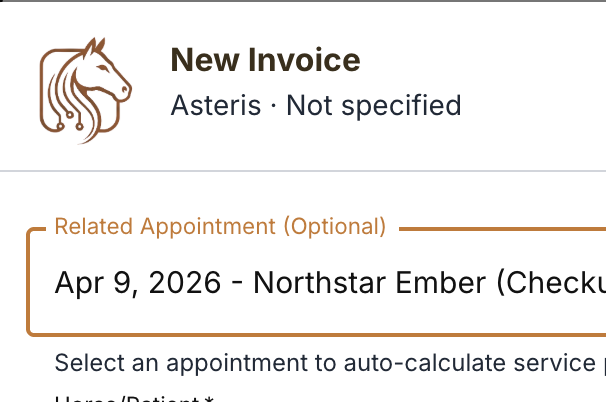
Then there is split billing, which has no small-animal equivalent. One farm call can produce charges against four horses with three different owners, a trainer who settles for two of them, and a barn manager who handles supplies for all four. Equine software stores ownership percentages on the horse record once, so every invoice for that horse splits automatically. Barn Operations goes a step further: apply a service to every selected horse at a facility during one visit and the software generates one invoice per owner, instead of forty invoices rebuilt by hand. The full mechanism is on our equine billing software page.
Offline sync
Barn aisles, indoor arenas and rural properties do not have reliable signal, so the software has to keep working without it, not merely open. In StableTrack's offline mode on the iOS app, and on the desktop app installed from the browser with offline mode switched on under Settings, you can browse patients, check the calendar, draft notes, record clinical observations, log appointments and take cash or check payments. Everything is stored on the device and syncs when the connection returns. The thing to ask for in a demo is the whole sequence: complete a record and an invoice with no signal, then watch it sync.
Horse-centred records
A dog's chart is mostly episodic. A performance horse may carry twenty years of history across pre-purchase exams, flexion tests, joint injections, dentistry, reproductive work and one lameness that comes back every spring. The question a vet asks is rarely what happened at this visit. It is what the left front looked like eighteen months ago, and who was riding him then.
Equine records make the horse the primary object and the visit subordinate to it: search by horse name and every exam, vaccination, medication and diagnosis over the years is in one place. Discipline, use and workload are clinical context (a hunter in full work and the same horse on layup are different patients with the same name), and when a horse changes hands the record moves with it without dragging the previous owner's financial history along. Access is role-based, because a horse has an owner, a trainer, a barn manager and, at a pre-purchase exam, a buyer's vet who needs the findings and a seller who does not. See equine medical records software for the record structure in detail.
How It Differs from Small-Animal Software
Most comparisons list twenty features and never explain why the lists differ. These are the seams, and each one traces back to where care happens.
| Aspect | Small-animal software | Equine veterinary software |
|---|---|---|
| Unit of work | An exam-room slot. The patient arrives. | A barn call on a route. The truck is the clinic. |
| Schedule | A grid of 15 and 30 minute slots, because drive time between patients is zero. | Drive time and geography are part of the appointment, and the afternoon reshuffles when the colic call comes in at two. |
| The record | Episodic. Vaccines, an ear infection, a dental, a limp, read one visit at a time. | Longitudinal, often twenty years, built around the horse, with discipline, use and workload as clinical context. |
| People attached | One owner per pet. | Owner, trainer, barn manager, agent, farrier, and at a PPE the buyer's vet, each with different access. |
| Billing | Checkout at the desk, one client per invoice, paid while the client is standing there. | Built after the vet has driven away, split across owners, trainers and barns from one farm call. |
| Imaging | A file attached to the visit note, captured down the hall. | A radiograph series shot on a tailgate that the owner, the trainer and the buyer's vet all need tonight, held inside a record that will be read in fifteen years. |
| Signal | Assumed. | One bar in the aisle. Records and invoices have to work offline and sync later. |
When small-animal software is the right call
A practice that works mostly out of a clinic, takes few farm calls and deals mostly with single owners can run well on general veterinary software for a long time. The seams only appear under load, and if you are not carrying that load, adapted software is cheaper and your team already knows it.
The seams open when the practice grows: a second vet in the field, a wider territory, a training barn with multiple owners, serious lameness work. The honest test is not which software is better in the abstract. It is whether your team has started building spreadsheets to cover for it.
Quick answer
Does your practice need equine veterinary software?
If your practice lives in a building, clinic software will serve you. If it lives in a truck, with farm calls, multi-owner horses and lameness work, the workarounds on adapted software grow until the schedule, the invoices and the records each live in a second system. The deciding factor is operational complexity, not practice size.
Where StableTrack Fits
StableTrack is equine practice management software from Asteris, built for the second kind of practice, the one that lives in a truck. Everything described above, field documentation, barn-level scheduling, percentage and Barn Operations billing, offline mode and horse-centred records, is in the product. An AI assistant on every screen takes voice or text to book appointments, create invoices, add patients and draft notes and discharge summaries. It is trained on equine terminology, it does not diagnose, and a veterinarian reviews everything before it enters the record.
At the AAEP convention in December 2025 we surveyed 49 equine veterinary professionals about their practice software. Average satisfaction was 2.7 out of 5. Seventy-eight percent rated their software a 3 or below, and 84 percent were switching, considering a switch, or looking for their first system. The complaints were consistent: offline does not work in the field, billing a barn full of horses takes forever, and the software was clearly designed for a different animal.
Connected to the tools equine practices already run
Keystone PACS
Imaging studies acquired through Keystone flow into the StableTrack patient record. Orders placed in StableTrack feed the Keystone modality worklist, and imaging charges land on the invoice automatically. Included at no additional license cost for practices running both. This is the equine PACS integration most general PMS platforms cannot offer.
QuickBooks Online
Invoices, customers and payments sync between StableTrack and QuickBooks Online automatically, removing the end-of-month reconciliation most practices do by hand. Sync activity is visible in-app, and failed syncs can be recovered without leaving StableTrack.
Stripe
Card and ACH payments taken directly from invoices, in the field or at the clinic. A payment marks the invoice paid, with no third-party portal and no separate reconciliation.
SMS reminders
Automated appointment reminders and client notifications sent from scheduling actions.
Who runs on StableTrack
Solo ambulatory vets
Spend the day in the truck and need everything on one device.
Multi-vet equine hospitals
Several doctors documenting and billing in parallel on a shared calendar.
Mixed practices
Clinic hours and farm calls on the same schedule, without the equine side living in a spreadsheet.
Sport and performance practices
Imaging, pre-purchase exams and trainer relationships, where one horse touches many people.
Comparing platforms on practice-management capability specifically? Our equine practice management software guide goes platform by platform.
Six Things to Check in a Demo
- 1
Equine-native data model
Height in hands, mare, gelding or stallion, trainer and barn as record types, ownership percentages on the horse. If any of these live in free text, the practice cannot search or report on them.
- 2
Offline that completes work
A full record and an invoice with no signal, synced cleanly afterwards. Ask to see the sequence, not the app opening.
- 3
Barn-level scheduling and billing
Drive time in the schedule, one service applied to many horses at a facility, one invoice per owner at the end.
- 4
Equine clinical templates
AAEP lameness grading, pre-purchase exam, dental charting, and DEA controlled-substance logging as the practice actually runs them.
- 5
Imaging inside the record
Studies land on the horse's record and imaging charges on the invoice, rather than a file attached to a visit.
- 6
Room to grow
The same system from solo calls to a multi-vet clinic, with role-based access for everyone attached to a horse.
Ask for each one in the demo, and ask to see it done in the product rather than described on a slide.
See It on Your Own Workflow
Trials are set up with our team, with your own data imported. Plans are $199 a month flat with unlimited users, so there is no per-seat charge for adding vets, techs or front-desk staff. Add a horse, run a visit, and you will see how it fits a farm call in about three minutes.
Flat $199/mo, unlimited users
Frequently Asked Questions
- Equine veterinary software is practice management software built for horse veterinarians. It organises records, scheduling and billing around the horse and around field work: drive time in the schedule, records and invoices that work without signal, equine data such as height in hands and AAEP lameness grades stored as searchable fields, and one visit billed to several owners, trainers and barns.
- Equine software is built around field-based care, records that span decades, and patients with several people attached to them. Small animal software is built around clinic visits, appointment volume, and one owner per pet. The underlying difference is whether the patient comes to you or you go to the patient.
- Almost. Equine veterinary software is the broad category of software horse vets use. Equine practice management software is the system that runs scheduling, records and billing. Most current platforms, StableTrack included, combine both in one system, and our equine practice management software page compares the platforms on that capability.
- Solo ambulatory vets, multi-vet equine clinics and hospitals, mixed practices with a serious equine side, and sport and performance practices coordinating owners, trainers and barns. The deciding factor is operational complexity, not practice size.
- If your vets work in barn aisles, indoor arenas or rural properties, yes. The test is not whether the app opens offline. It is whether a vet can complete a full record and invoice with no signal and have it sync cleanly afterwards. StableTrack's offline mode does that, and it is worth asking to see that specific sequence in any demo.
- Small animal billing assumes checkout, with the invoice finalised and paid while the client is present. Equine billing happens after the vet has left, often across several horses and several payers from a single farm call. Split billing across owners, trainers and barns has no small animal equivalent.
- Mixed practices are a genuine edge case. The question is which side of the practice carries more operational complexity. If the equine side involves regular farm calls, multi-owner horses or serious lameness work, that side usually dictates the tooling, because the workarounds there cost more than the workarounds on the small animal side.
- Answer this before anything else. Ask any vendor how history is migrated, what happens to imaging attached to old visits, and whether records stay readable during the transition. StableTrack trials are set up with your own data imported, and our team maps the migration with you before you commit.