The sticker price on equine practice management software is a starting line, not a finish line.
_1781017365231.webp)
You see a friendly number on the pricing page, a low per-user base, a "starts at" figure that makes the decision feel easy. Then you go to actually run your practice on it, and you discover the number you were quoted and the number you pay are two different things.
This isn't a knock on any one company. It's how a lot of software in our space is priced. And if you do barn calls for a living, it's worth understanding the math before you sign up, because the gap between the advertised price and the real price tends to be widest for exactly the vets the "cheap" plans are aimed at.
The base-price illusion
A low base price is doing a job, and that job is to get you to sign up. What it often isn't doing is covering the things you need to get through a normal day in the field.
Read the fine print on most "starts at $X" plans and the base usually buys you medical records and invoicing. Useful, but that's the floor, not the practice. The features that actually change how your day runs are frequently sitting one tier up, or parked in a list of add-ons you toggle on à la carte.
The add-ons that aren't really optional
Here's the part that catches people. The add-on menu is framed as "pay for only what you need," which sounds great until you notice that what you need is most of it. Watch for these:
Each of these is "optional" right up until it's the feature you reach for every single day.
Now do the multi-vet math
A single vet on a base plan looks cheap. The math changes fast when you scale it the way a real practice does.
Take a rough, illustrative example. Say a base plan runs around $89 per user, per month. Add two associates, switch on offline mode at roughly $40 per user, layer in AI documentation, and turn on one integration. You started at "under a hundred bucks" and you're now looking at something in the neighborhood of $400 a month, before migration costs and before anyone's added inventory or a second location.
That's not a bait-and-switch. Every one of those charges was on the page. It's just that nobody adds them up for you on the way in.
The other hidden cost: pricing that moves after you're in
There's a second cost that doesn't show up on any pricing page: the risk that the price changes after you've built your practice around the software.
The equine software space has seen real consolidation, and we hear the same worry from vets over and over at conferences: I signed up at one price, the company got acquired, and the renewal looked nothing like what I started with. When your records, your billing, and your daily workflow all live in one system, a quiet repricing at renewal is expensive to walk away from.
Transparent, stable pricing isn't a glamorous feature. But "the price I see is the price I pay, and it doesn't lurch on me at renewal" is worth a surprising amount once you've been on the other side of it.
How to actually compare cost
Before you compare two pricing pages, compare what's inside the price. Ask every vendor the same questions:
Total cost of ownership is base price, times users, plus the add-ons you'll genuinely use, plus migration, across the length of time you'll actually stay. Run that number for each option, and weigh it against what a purpose-built equine practice management platform folds in as standard. It's the only fair comparison.
Where StableTrack lands
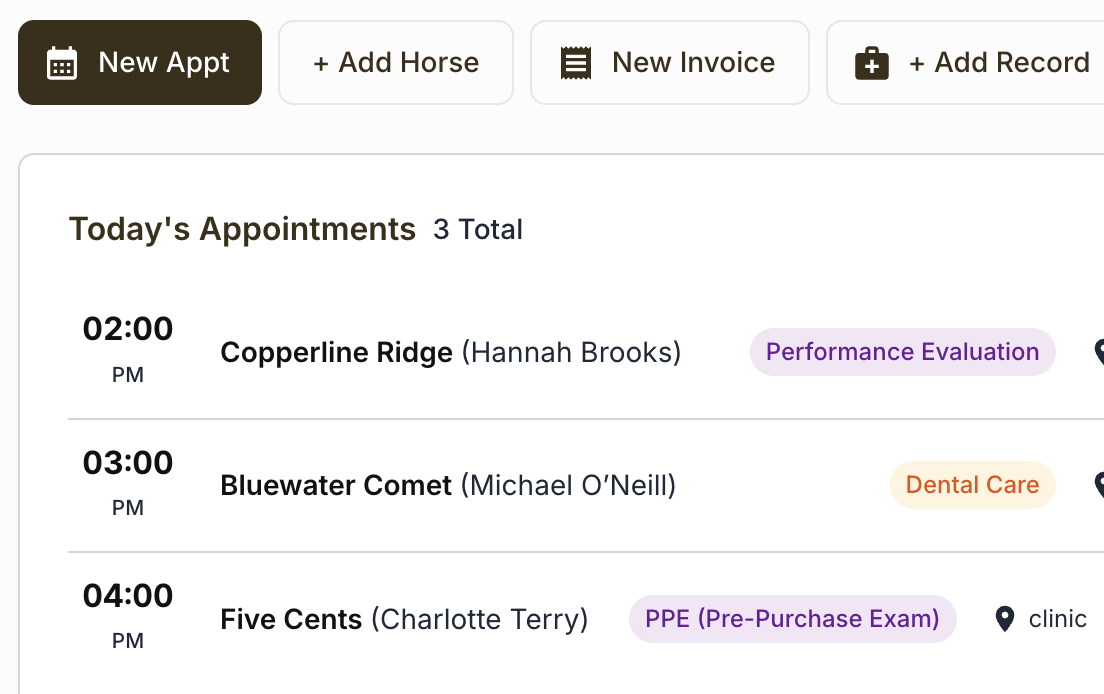
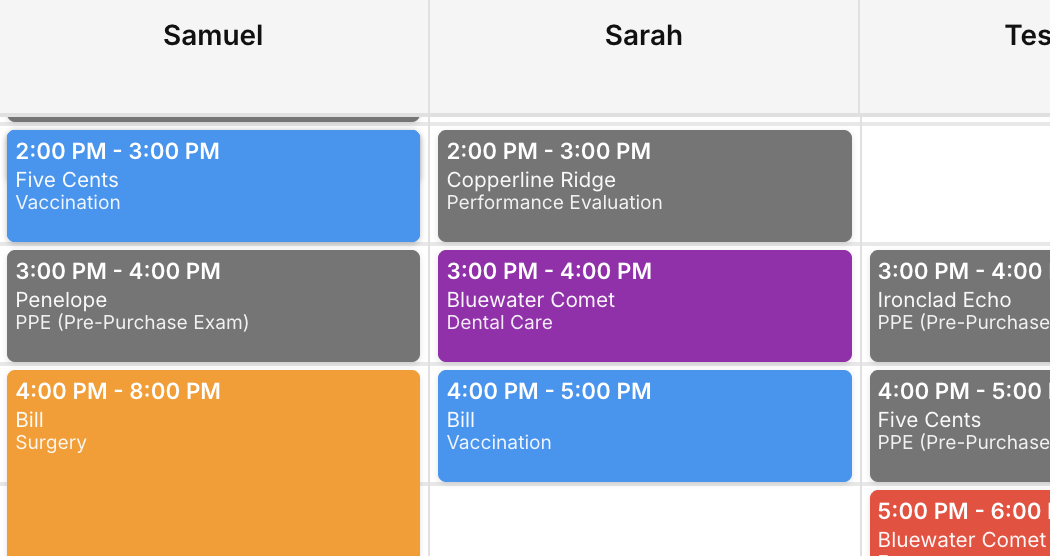
We built StableTrack pricing to survive that checklist.
The tools an ambulatory equine vet uses every day (AI SOAP documentation, scheduling built around barn-vs-clinic workflows, multi-owner split billing, built-in payments) are part of the product, not a menu of upsells. AI usage is metered with a counter you can see right in your subscription panel, so you always know where you stand and there are no surprise overages. Plans are public, and you start with a free trial rather than a sales hurdle.

Equine practice software, side by side
A like-for-like look at how the major equine systems price the things that matter in the field. Pricing reflects publicly listed rates as of June 2026; always confirm current pricing on each vendor's site.
Pricing figures cited for other vendors reflect publicly available information as of June 2026 and may have changed. Verify current pricing with each provider.
The cheapest base price and the lowest total cost are rarely the same line on the page. Add up what you'll actually switch on, then decide.