You walk into the barn on a Tuesday morning for a pre-purchase exam. You shoot a full lameness series on the modality, then sit in the truck and email the DICOMs to a radiologist. Two days later the report lands in your inbox, and you re-upload it into the horse's chart by hand. By Thursday's recheck, you are already five clicks deep trying to find what you ordered on Tuesday.
That is the daily reality for most equine practices. Four systems, three logins, and a lot of hoping nothing falls through the cracks. The 2023 AAEP equine practice survey found that 78 percent of equine vets are dissatisfied with their current PMS, and imaging integration is consistently in the top five feature requests. The friction is not imagined. It is structural.
This post walks through what equine PACS integration actually means, how the Keystone Omni and StableTrack integration handles it, and what changes when imaging lives inside the horse's chart instead of beside it.
The state of equine imaging workflows today
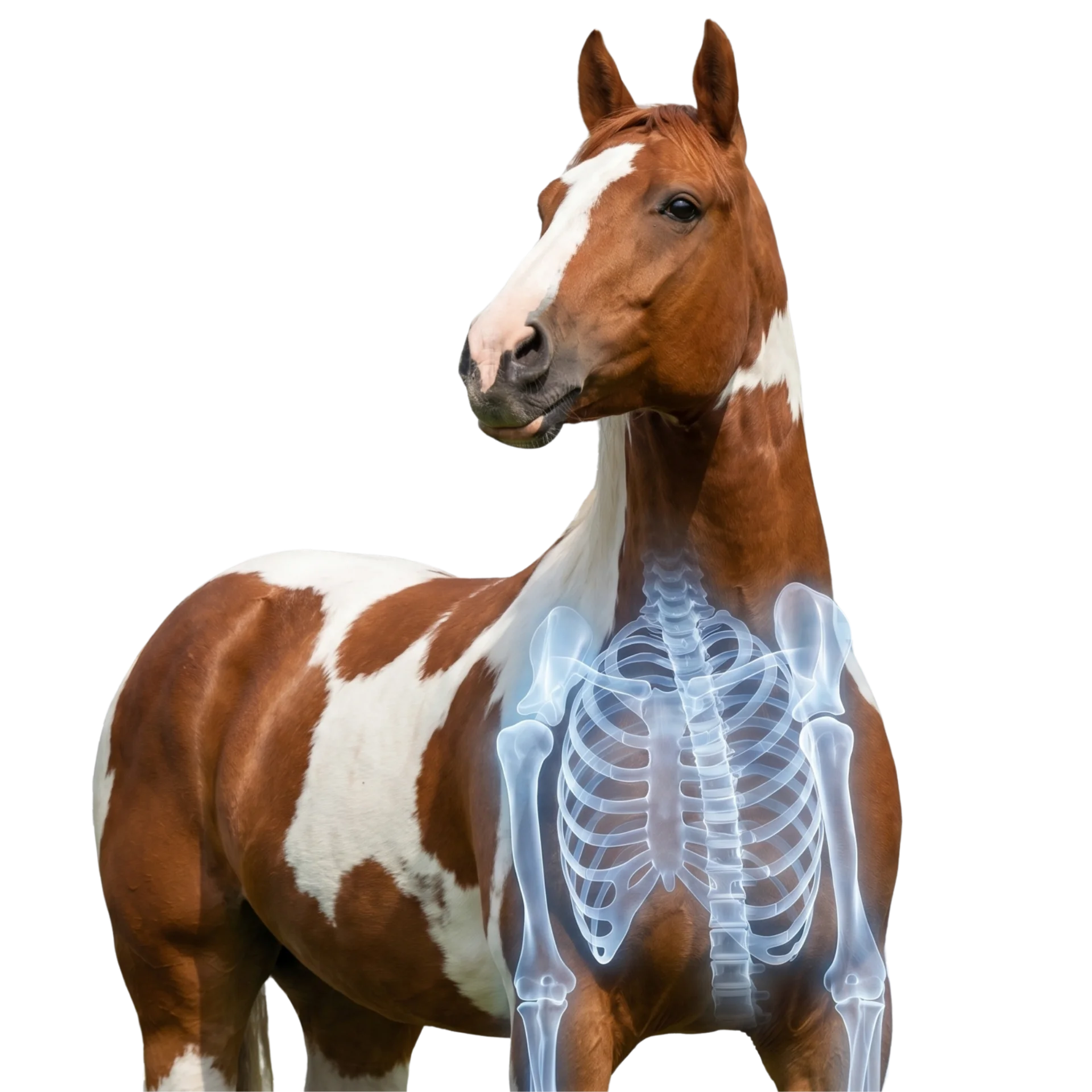
The typical equine imaging workflow looks like this:
- You create the visit in your PMS.
- You walk to the modality and re-enter the patient details by hand.
- You email or upload the study to a radiologist.
- The signed report comes back as a PDF, and you upload it into the chart.
Each step is a place where typos happen, billing slips, and history fragments. A single horse can have radiographs in one folder, ultrasound in another, and the report sitting in a clinician's inbox. When the owner asks to send everything to a referral hospital, you spend twenty minutes assembling what should already be in one place.
The cost is not just time. Studies that are not linked to a procedure code do not get billed. Reports that arrive late do not make it into discharge paperwork. And when something gets contested six months later, the audit trail is thin.
What "PMS and PACS integration" actually means
Equine PACS integration is more than a link between two pieces of software. Done properly, it covers three specific handoffs.
Modality worklist. The DICOM Modality Worklist standard has existed since the 1990s, but most equine practices still do not use it because their PMS does not push to a worklist server. When you order a study from the horse's chart, the modality (radiograph plate, ultrasound, CT) sees the order on its DICOM Modality Worklist with all patient information already populated, so the technician selects the patient from a list rather than retyping name, age, accession number, or any other chart details.
Automatic return of reports and thumbnails. Once the radiologist finalizes a report in the PACS, both the PDF and a small image thumbnail return to the patient record automatically. No manual upload. No "did the report ever come back?" check.
Viewer launch from the chart. A clinician will be able to open the full diagnostic viewer with one click from the horse's profile, with the correct study already loaded.
If any of those three handoffs is missing, you still have a four-system shuffle.
How the Keystone Omni and StableTrack integration works
The integration between Keystone Omni and StableTrack is built around those three handoffs, plus one more that matters in every kind of practice (human, small animal, exotic, equine) but takes on extra weight in equine work: discharge. Discharge orders are how the horse, the owner, and the referring vet leave the visit on the same page, and when imaging is part of the case, those summaries are only as useful as the studies and reports attached to them.
Submit imaging from the horse's profile
From any horse's chart in StableTrack, you select the study type, the modality, and the clinician. From the PMS, the order is pushed to the Keystone Omni RIS (radiology information system), and that request then appears on the Modality Worklist (MWL), where the technician at the plate or ultrasound machine selects the patient to image. There is no double-entry, and the accession number stays consistent end to end.
Reports and thumbnails return to the chart
When the radiologist finalizes a report inside Keystone Omni, the signed PDF and a representative thumbnail return to the horse's StableTrack chart within minutes of sign-off. The chart shows the study date, the radiologist of record, and a link straight back to the full image set. No one re-uploads anything.
Open studies in the Keystone Omni viewer
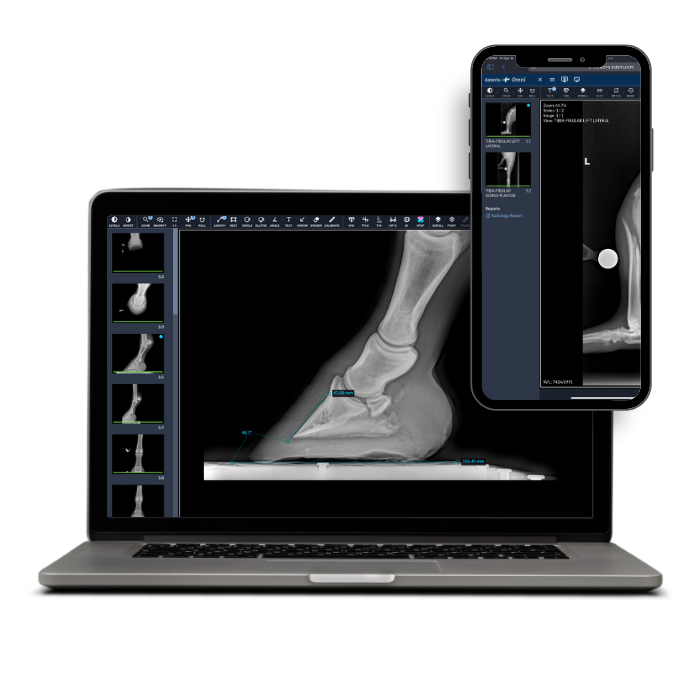
Clinicians can launch the Keystone Omni viewer directly from the horse profile with the correct study preloaded. Side-by-side comparisons with previous studies on the same horse take a click, not a search. For practices working through their broader equine imaging workflow, that single behavior tends to drive the largest day-to-day time savings.
Discharge summaries include imaging automatically
When a horse is discharged, StableTrack assembles a discharge summary that pulls in every imaging study from the admission window. Thumbnails appear inline, and the full report PDFs are attached. Owners and referring vets receive the same complete record, without anyone manually collating files.
Why this matters for ambulatory and hospital equine practices
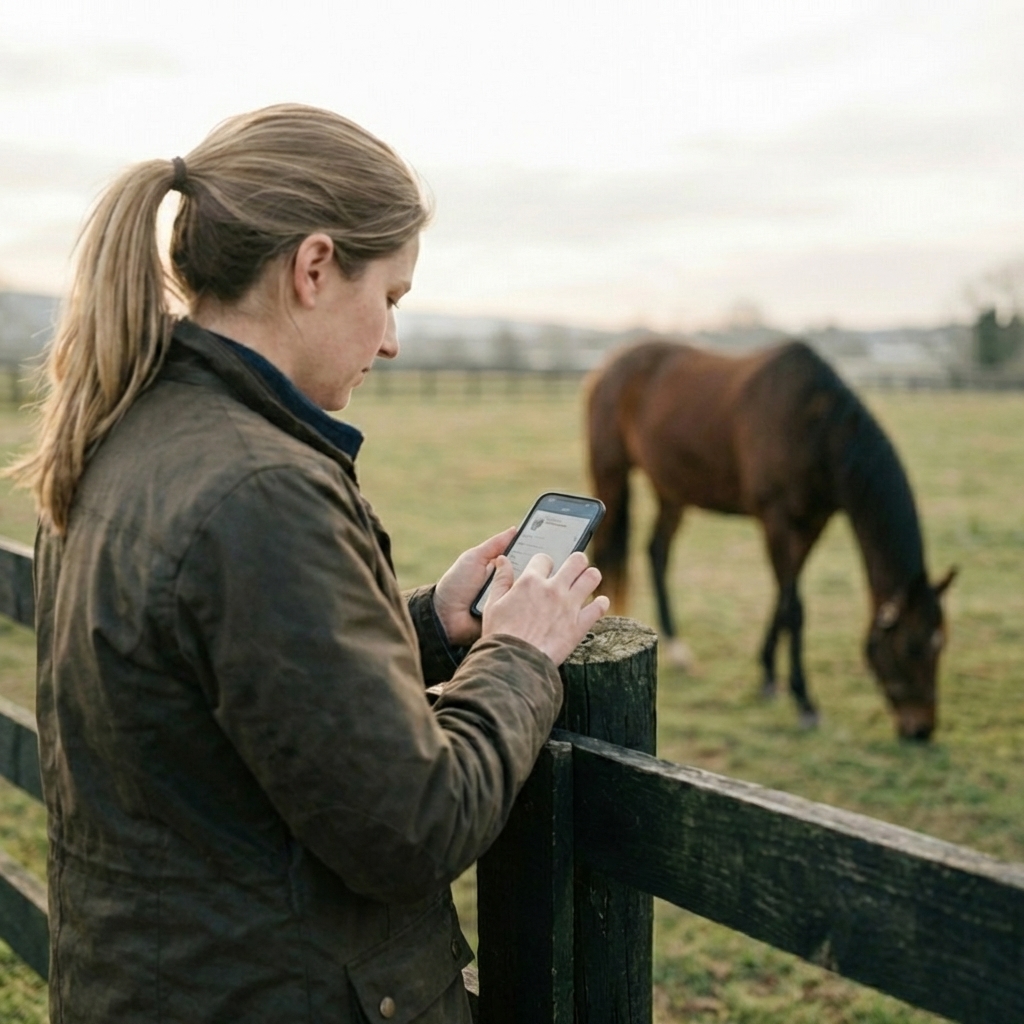
For ambulatory practices, the time savings show up at the truck. You finish a barn call, hit submit on the chart, and the rest happens without you. Studies are not sitting in your phone's photo roll waiting to be sorted at 9pm.
For hospital practices, the gain is in throughput and audit. Procedure codes for imaging studies populate the invoice as soon as the order is created, so billing does not depend on someone remembering to add charges later. Every study has a provenance trail: who ordered it, who shot it, who read it, and when. That matters when an insurance claim or a peer-review question comes back months later.
Owner experience also shifts. Discharge summaries with imaging built in look like the work of a referral hospital, not a small practice. Referring vets get a complete picture instead of a partial one. Both effects compound over time.
What this looks like day-to-day
Picture a Tuesday PPE on a 6-year-old warmblood. You finish the lameness exam, open the horse's chart in StableTrack, and order a survey radiograph series. By the time you walk to the plate, the study is already on the worklist. You shoot, send to the radiologist through Keystone Omni, and finish your day.
Wednesday morning the radiologist reads the study. The signed report and thumbnails are back in the horse's chart by lunch. You see them when you open the chart for a follow-up phone call with the buyer.
Thursday you do a recheck on the same horse. You open Keystone Omni from the chart with one click and pull up Tuesday's study next to today's. The owner asks for everything to be sent to their farrier and trainer. You hit discharge. The summary goes out with both studies attached, the report PDFs, and a clean timeline of what happened across the week.
Same horse, same week, no system shuffle.
See it in action
If you want to see how the Keystone Omni and StableTrack integration would look against your current imaging workflow, book a 15-minute fit check. We will walk through your day-to-day and show where the system shuffle goes away.